Community engagement that survives the hearing room.
Engagement is not judged at the open house. It is judged months later, when a licence variation sits in front of a regulator, a complaint becomes a file, and someone asks what the community was actually told.
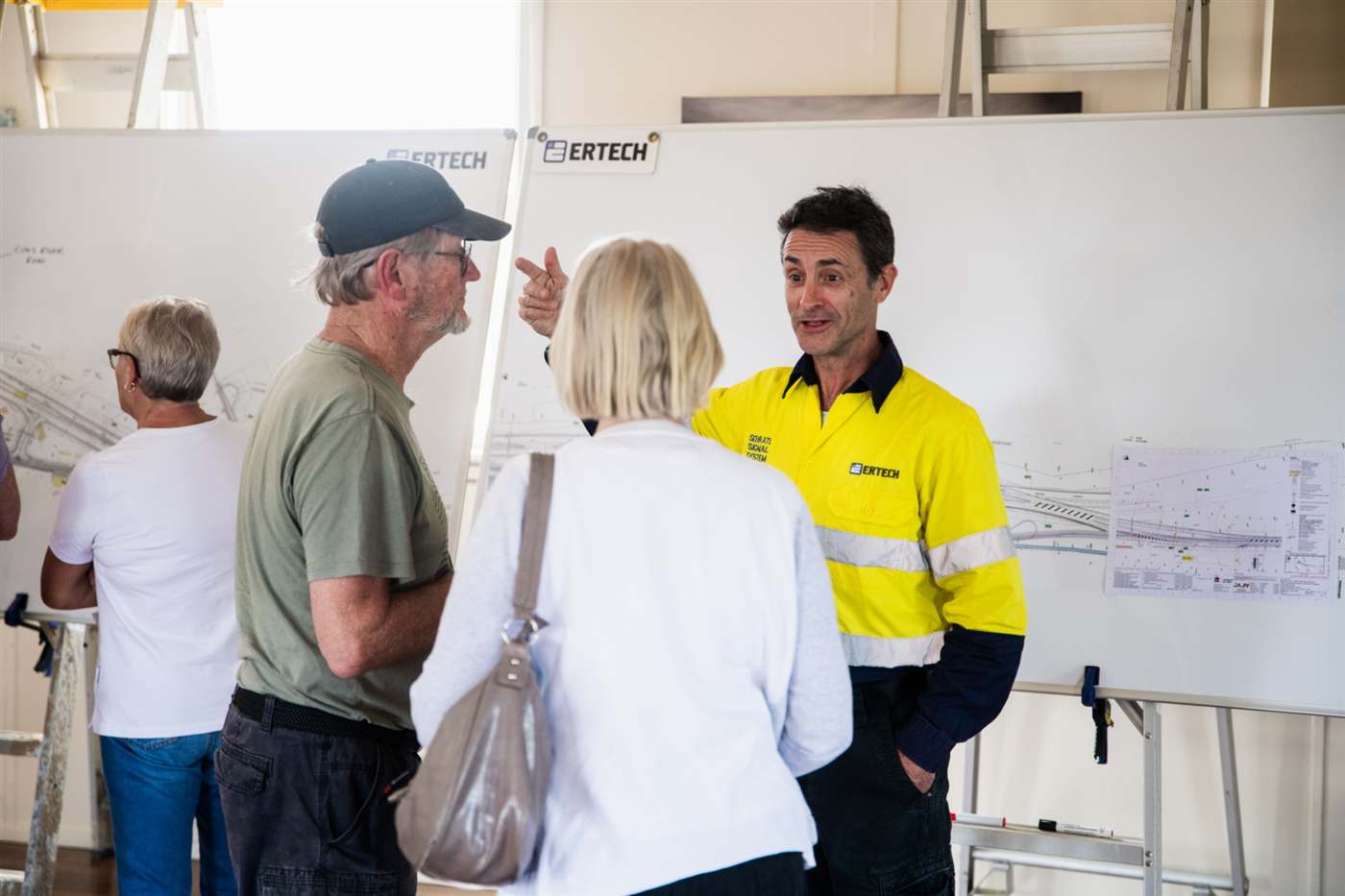
Most engagement on construction projects is designed for one audience: the community in front of you. Notifications go out, doorknocks happen, a complaints line is set up, and everyone involved genuinely tries to be decent to the people living next to the work. That part matters, and most teams do it with good intent.
But every engagement activity on a major project also has a second audience, one that arrives later. The regulator deciding whether to vary your licence. The council officer weighing an exemption. The environmental representative reviewing a complaint that became a non-conformance. The hearing room, in whatever form it takes. That audience never met your team. It meets your records.
Two audiences, one plan
Engagement that survives the hearing room is designed for both audiences at once. It still runs on empathy and plain language at the front door. Behind it sits something harder: an engagement plan traced clause by clause to the contract specification and the conditions of approval, a stakeholder and obligations register built from the environmental assessment, and a record of every commitment made to every property.
The trace matters because engagement obligations are real obligations. “Consult affected landholders prior to commencement” is a condition like any other, with an owner, a timing and an evidence requirement. Projects treat noise limits with reverence and engagement conditions as a vibe. Auditors read them the same way.
An engagement plan that cannot be audited is a goodwill exercise. Goodwill does not vary a licence.
The night works test
Night work is where the two audiences meet. To work at night you need the community to tolerate it and the regulator to permit it, and the second depends on evidence of the first. The application that succeeds is not the one with the best acoustic model. It is the one that can show, property by property, who was consulted, what respite was offered, what was agreed and what was delivered.
On a TfNSW road upgrade, we negotiated night works and respite agreements with more than 300 properties — doorknocks, agreements, alternative accommodation where the predictions warranted it, every one of them recorded against the property it belonged to. When the environment protection licence went forward for variation, the engagement record carried it. The licence was varied to allow five nights of work a week, and the programme held.
What the hearing room looks for
- Commitments in the community's words, verbatim. A paraphrased promise is a dispute waiting for a date.
- A register, not a mailbox. Every interaction logged against a property, a stakeholder and the obligation it discharges.
- Complaints closed, not just answered. The loop from complaint to investigation to response to change on site, documented end to end.
- Respite that was offered before it was demanded. Nothing reads better in front of a regulator than generosity you did not have to show.
- Consistency between what was said and what was built. The fastest way to lose a hearing room is a notification that promised something the site never did.
The best engagement teams we have worked beside keep one discipline above all others: they write the commitment down in front of the resident, read it back, and file it the same day against the property record. It feels slow. It is the single habit that makes every later approval faster.
Build the file as you go
None of this can be reconstructed afterwards. A hearing room can tell the difference between a file built in real time and one assembled the week before the application, and so can a regulator. The projects that keep their working hours, their licences and their community are the ones that treated every doorknock as evidence from the first day.
Be decent to your neighbours. Then write it down like you will need to prove it. You will.